
The previous Prasa board of directors should be found guilty of breaking the law by not renewing security contracts, which led to widespread theft and damage to infrastructure. This would stop them from being appointed to any other board in the future.
This is what Mkhuleko Hlengwa, chairman of Parliament’s Standing Committee on Public Accounts (Scopa), said when he visited Philippi in Cape Town on March 20. The goal of the site visit was to see how the rebuilding of Prasa’s facilities and the moving of families who had built shacks on the railway line were going.
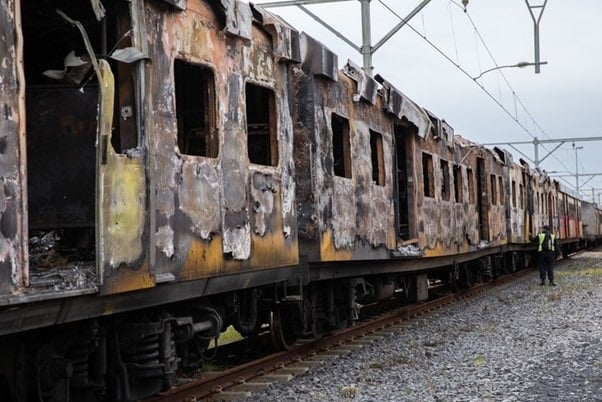
Services on Prasa’s Metrorail Central Line between Cape Town station and Khayelitsha and Mitchells Plain were stopped in December 2017 because of months of theft, vandalism and damage to infrastructure. This happened because of ongoing security contracts that were not followed and may have been tainted. Then, in 2019, Prasa stopped paying for protection services because there were no new contracts in place.
More damage and theft to infrastructure happened, and during the Covid lockdown, people who couldn’t afford garden rentals stayed on the Central Line, which wasn’t working. Over time, thousands of homes moved into different parts of the queue.
Hlengwa said that the work that had been done to fix the railway equipment and move the thousands of people who had been living in shacks on the railway line would be undone if those responsible did not face consequences.
“The exercise will be incomplete if the board don’t pursue the then board members (and) hold them liable and accountable for the kinds of decisions that they took, considering the millions and billions of rands which now have been incurred,” Hlengwa said.
According to him, the committee thought that while the Central Line was being fixed, the former board members who “should be declared delinquent” would be punished.
Three weeks before the site visit, Hlengwa told people from the national transport department and Prasa that “the ball is still in Prasa’s court” when it comes to going after the former board of directors.
“I hope there is progress on that,” said he. The fact that Prasa didn’t handle the consequences well is a breach of duty. If you did nothing about that, you would be okay with what they did. You need to make things right by going after those guys. We are in a mess because of that choice [to end security contracts], so we can’t change our minds.
Joseph Mayson, a lawyer for the train activist group #UniteBehind, told GroundUp that his group agrees with the call for the former board members to be charged with crimes.
Getting people responsible for state control and bad management at Prasa is a very important step. “Scopa needs to make sure that Minister Chikunga, who is in charge of transport, goes to court to have the directors declared in default,” Mayson said.
He said that the ending of security contracts “has done terrible things for Cape Town’s poor and working class.”
“If not in the whole country, the Central Line is the most important line in Cape Town.” Because it’s been closed in whole or in part since 2018, poor and working-class people have had to spend more than 30% of their income on other ways to get around. It also makes our city’s spatial flaws worse, which are a legacy of apartheid.
Andiswa Makanda, a spokesman for Prasa, said that the Minister of Transport should take action against the old board because he or she chose who would be on the board.
The oversight visit on March 20 was led by Nosizwe Nokwe-Macamo, who is currently chairperson of the Prasa board. She told GroundUp that declaring the former board members delinquent was “an issue that is dealt with by the shareholders,” which are the state.